
Most financial advisors will tell you that a bad credit score is a life sentence. They’ll claim it’s a permanent stain that keeps you from owning a home or driving a decent car without a massive headache. They’re wrong. A low score is just a temporary math problem, not a moral failing or a permanent barrier to liquidity.
The reality is that the credit industry is highly segmented. While big national banks might laugh you out of the building if your score is in the gutter, there’s a massive secondary market of lenders that exists specifically to bet on people who have struggled. These lenders aren’t charities, but they’re willing to play the game if you understand the math.
If you’re sitting there with a score that makes you sweat, you have two choices: keep waiting for a miracle or start navigating the specialized market of subprime lending. The second option is faster and often much more expensive, but it provides the immediate cash that life often demands without much warning.
What Your Score Actually Means to a Lender
When we talk about “bad credit,” we’re usually talking about a specific numerical range. According to Bankrate, personal loans for bad credit are designed for borrowers with credit scores of 580 or lower. If you fall into that bracket, the traditional banking rules stop applying to you. You’re no longer a “prime” borrower; you’re a “subprime” risk.
This shift in status changes everything. The interest rates you see in glossy brochures for “prime” customers don’t apply to you. You’re entering a different arena where the lender looks for more than just a score. They want to see income stability, employment history, and sometimes even a co-signer. They know you’re a risk, so they price that risk directly into the cost of the loan.
You might find yourself looking at an offer that carries a 29% interest rate and a 5% origination fee. That can feel like a gut punch when you were expecting something closer to 10%. However, if you’re using the money to consolidate high-interest debt or cover an emergency, that 29% might still be cheaper than the late fees and collection calls you’re currently facing. It’s a trade-off.
Sometimes, people think they need to settle for a tiny micro loans for bad credit to get by, but a larger, structured loan is actually the better tool for long-term recovery. The goal is to move from chaos to a predictable monthly payment, even if that payment is high.
Finding a Path Through the Noise
The online lending space is crowded. It’s easy to get lost in a sea of advertisements promising “instant approval” and “no credit impact” checks. Most of these are just pre-qualification tools. They let you see if you qualify without a hard inquiry hitting your report, which is a smart way to shop around without making your score even worse.
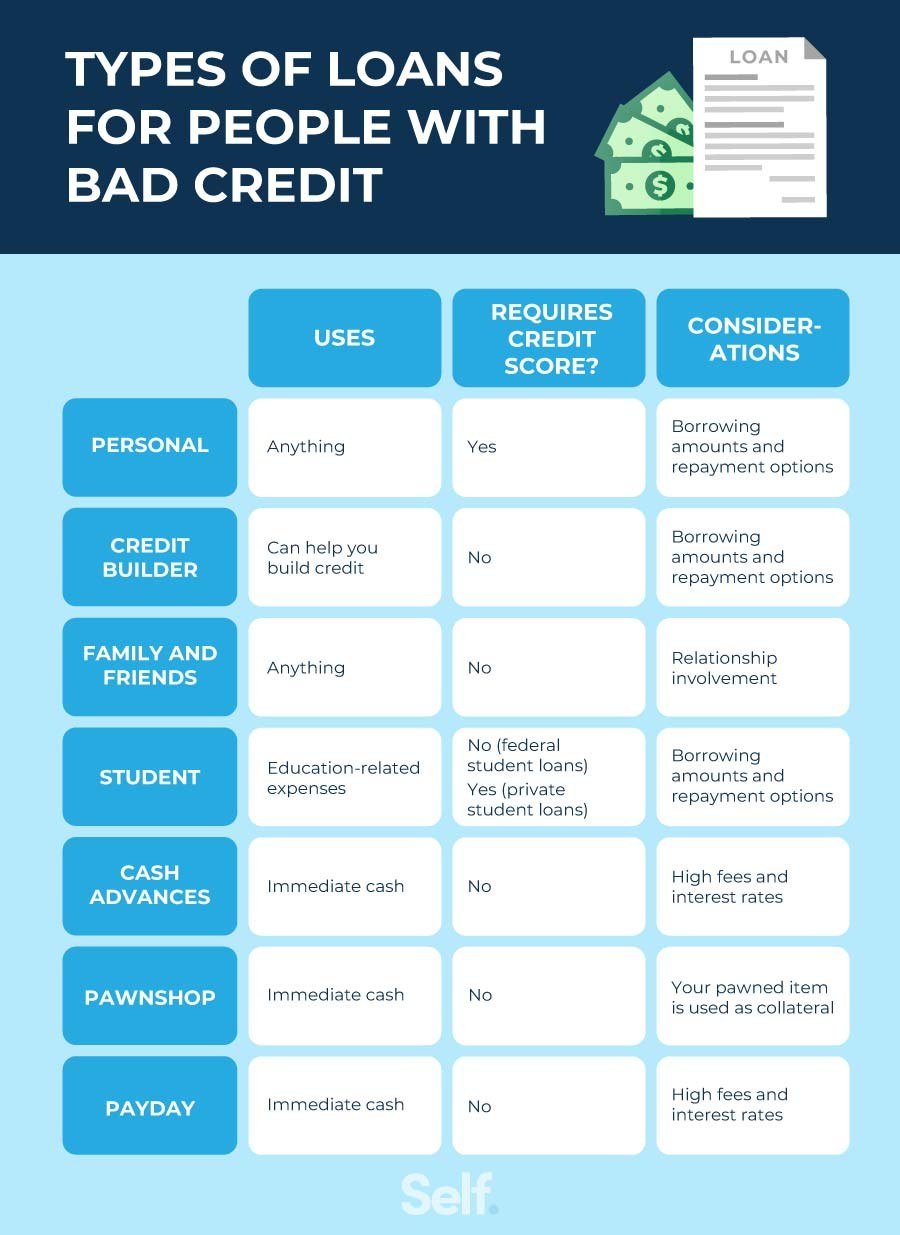
There are several ways to access cash when your credit is in the basement. You can go the route of a traditional personal loan, a line of credit, or even a secured loan if you have something of value to put up as collateral.
- Unsecured Personal Loans: These require no collateral. You’re borrowing based on your promise to pay, which is why the interest rates are higher for bad credit.
- Lines of Credit: This works like a credit card. You’re approved for a maximum amount and only pay interest on what you actually spend.
- Secured Loans: These are backed by an asset, like a car title or a savings account. Because there is collateral, these are easier to get but carry the risk of losing your asset.
- Peer-to-Peer Lending: These are platforms where individual investors fund your loan. They often have different criteria than big banks.
If you’re in a specific metropolitan area, your options might be even more localized. For instance, if you are looking for online personal loans in Seattle for good and bad credit, you might find that local-focused lenders or national players offer different speeds of funding. Some lenders can have money in your bank account in as little as one to two business days, which is vital when you’re dealing with an urgent repair or a medical bill.
The Mathematics of the Subprime Loan
Before you sign anything, you need to look at the “all-in” cost. A loan isn’t just the principal amount you receive; it’s the total amount you pay back over the life of the loan. This is where many people get trapped. They see a $5,000 loan and think they can afford $150 a month, forgetting that the interest rate is so high the principal barely moves.
The math works like this:
| Loan Feature | Prime Borrower (720+) | Subprime Borrower (<580) |
|---|---|---|
| Typical Interest Rate | 6% – 12% | 25% – 36% |
| Origination Fees | Often $0 | 1% – 8% |
| Approval Speed | 3-5 Business Days | 1-2 Business Days |
| Collateral Required | Usually None | Often Required or Co-signer |
If you take a loan with a 29% interest rate, you are effectively paying for the privilege of moving money through time. You’re buying time. If that time allows you to avoid a bankruptcy or a massive utility shut-off, it’s a calculated move. If you’re using it to buy a TV, it’s a mistake.
Some lenders, like Upstart, have changed how we look at this by using more than just a FICO score. They might look at your education and your employment history to determine if you’re a good bet. This is a significant shift because it allows people with thin credit files or recent hiccups to prove their reliability through other data points.
Avoiding the Debt Trap
The biggest danger isn’t the interest rate itself; it’s the “revolving door” effect. This happens when you take out a bad credit loan to pay off a credit card, but because you haven’t fixed the underlying budget issue, you end up maxing out the credit card again. Now, you have the loan *and* the credit card debt.
You must have a plan. You can’t simply throw money at a problem and hope it goes away. You need a specific, documented reason for the loan. If the goal is debt consolidation, ensure the loan is actually being used to kill the high-interest debt, not just to move it from one pile to another.
I’ve seen people struggle for years because they tried to fix everything at once. They took a high-interest loan and tried to pay off a car, student loans, and a medical bill all in one go. They collapsed under the weight of the monthly payments. Do not do this. Pick one high-priority target and use the loan to settle it.
It is a brutal process. It takes discipline. You have to treat the loan repayment like a tax that you cannot avoid.
The goal is to use these tools to build a bridge to a better score. Once you’ve paid down your balances and your score climbs into the 640s or 680s, you should immediately look to refinance that high-interest debt into a lower-interest product. That is the only way to win. Use the subprime market to get through the door, but do not live there.